 English
 Русский
 Eesti
Eesti
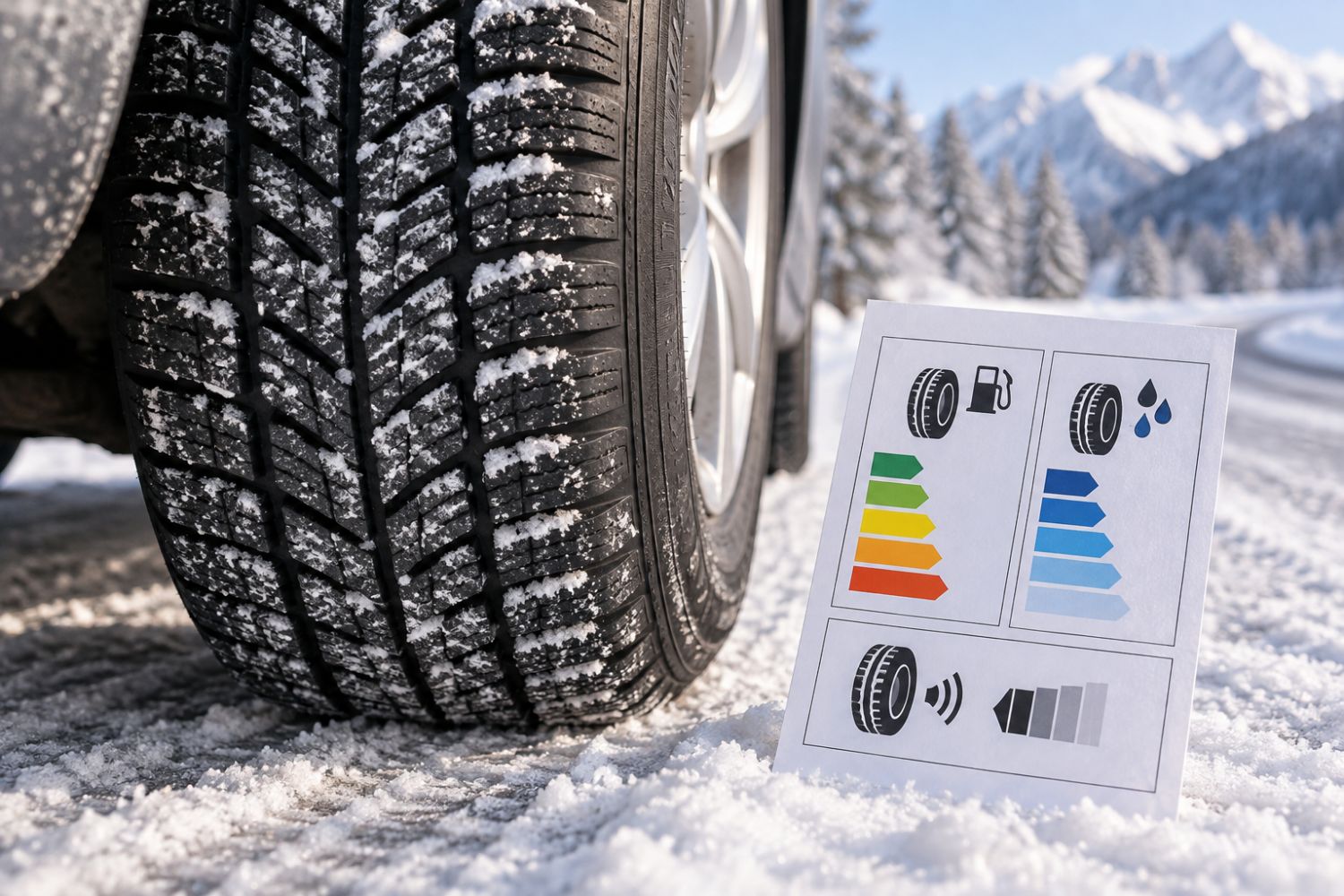
A tyre sidewall and product page can show several different symbols. They answer different questions: whether a studless tyre has met a snow-grip test, how it brakes on wet asphalt and how much external noise it produces. When buying studless winter tyres for Estonia, start with 3PMSF.
What is the difference between 3PMSF and M+S?
3PMSF depicts a three-peak mountain and snowflake. The European Commission explains that a tyre earns this symbol by meeting a specified snow-grip test. The Estonian Transport Administration requires 3PMSF on studless tyres used as winter tyres in Estonia. M+S alone does not satisfy that requirement.
The ice-grip pictogram is separate. It indicates that the tyre has passed an ice-grip test, and the Transport Administration recommends looking for it when choosing studless winter tyres. Check wet-road performance separately: a tyre designed for severe ice is not automatically the best choice for every rainy, mild day.
What does the EU tyre label show?
- Rolling resistance, A–E: relates to energy consumption and driving range.
- Wet grip, A–E: compares braking performance on wet asphalt; A is the better result.
- External rolling noise: a decibel value and an A–C class. This measures noise outside the car, not cabin comfort.
- Snow and, where applicable, ice symbols: indicate the corresponding tests, but do not describe every aspect of winter performance.
- QR code: links to the model's record in the EU EPREL database.
How should you use these details?
First confirm the approved size, load index and speed rating for your vehicle. Then compare suitable models by 3PMSF, wet grip, rolling resistance and noise. If icy roads are common on your route, check the ice symbol and independent tests of the exact models. The EU label is a useful comparison tool, but it does not give a complete picture of handling on ice, deep snow or dry roads.
Find tyres in the right size at Rehvidemaailm and verify the selected model's markings before ordering.